
AI and the Future of Work: A New Era for Businesses
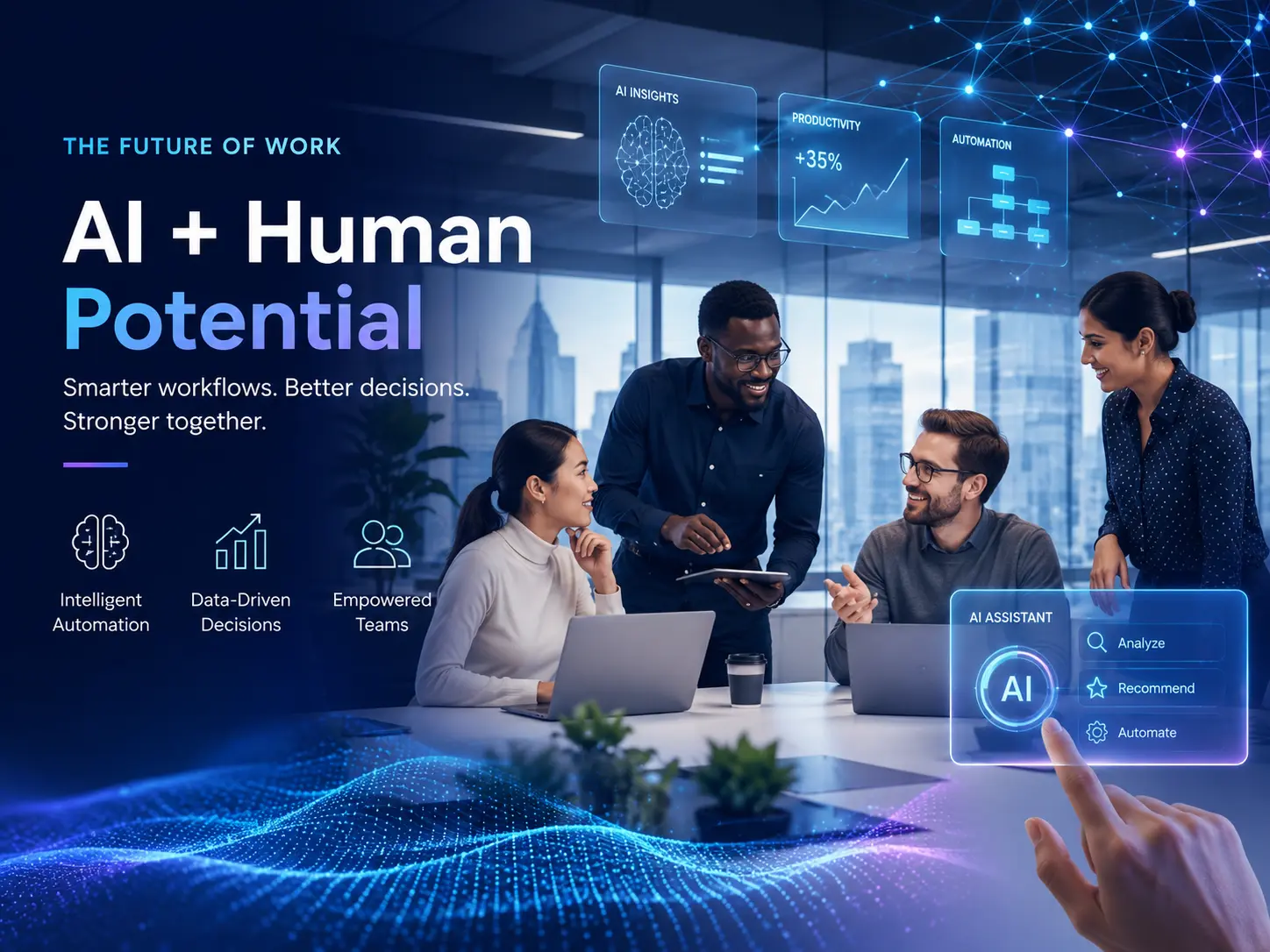
Artificial Intelligence is no longer just a future concept. It is already changing the way businesses work, communicate, analyze data, serve customers, and make decisions. From automated customer support to AI-powered dashboards, companies are now using intelligent tools to improve speed, accuracy, and productivity.
Recent industry research highlights how quickly AI is reshaping jobs and workplace models, with Cognizant reporting that AI may impact 93% of jobs in some way and create a major labor shift across industries. For businesses, this does not mean replacing people completely. It means redesigning work so humans and AI can perform better together.
AI Will Support Human Talent, Not Fully Replace It
One of the biggest misunderstandings about AI is that it will remove the human role from business. In reality, AI works best when it supports employees by handling repetitive, time-consuming, and data-heavy tasks. Humans are still needed for judgment, creativity, leadership, empathy, and strategic decision-making.
For example, an AI chatbot can answer common customer questions instantly, but a human support executive is still required for complex complaints, emotional conversations, or high-value customer issues. Similarly, AI can screen resumes, but final hiring decisions should still involve human evaluation and cultural fit.
How AI Is Changing Daily Business Operations
AI is helping businesses become faster and more efficient across departments. In sales and marketing, AI can analyze customer behavior and suggest better campaign strategies. In finance, AI dashboards can identify trends, unusual patterns, and reporting gaps. In HR, AI tools can improve hiring, onboarding, and employee engagement.
Small and medium businesses can also benefit from AI by automating emails, reports, customer follow-ups, appointment scheduling, and data entry. This allows teams to spend less time on manual work and more time on growth, customer experience, and innovation. Businesses that want to adopt intelligent automation can explore data and AI solutions to build smarter workflows and improve decision-making.
Preparing Employees for an AI-Driven Workplace
AI adoption is not only a technology change; it is also a people change. Businesses need to train employees to understand how AI tools work, where they can be used, and how to use them responsibly. Employees do not need to become AI engineers, but they should understand how to work with AI-powered systems.
The most important future-ready skills include data understanding, digital communication, problem-solving, critical thinking, adaptability, and responsible AI usage. Companies that invest in upskilling their teams will be better prepared for the future of work.
Responsible AI Adoption Is Important
While AI creates many opportunities, businesses must also manage risks carefully. Data privacy, bias, inaccurate outputs, overdependence on automation, and security concerns must be handled from the beginning. AI should be used with clear policies, human review, and proper governance.
Before using AI in sensitive areas like hiring, finance, healthcare, or customer data management, companies should define approval workflows, data protection standards, and accountability rules. Along with AI adoption, businesses should also strengthen their cybersecurity strategy to protect sensitive data, systems, and customer trust.
Building a Human-Centered AI Strategy
The future of work will belong to companies that combine technology with human intelligence. AI should not be treated as just another software tool. It should be part of a larger digital transformation strategy that improves workflows, supports employees, and creates better customer experiences.
At Tekizz, we believe businesses should adopt AI in a practical and scalable way. The right approach is to identify repetitive tasks, improve data visibility, automate where it makes sense, and keep human decision-making at the center. Companies planning long-term digital transformation can benefit from custom software development that aligns AI, automation, and business operations into one scalable solution.
Conclusion
AI is reshaping the future of work faster than many businesses expected. Companies that act early will be able to improve productivity, reduce manual effort, make smarter decisions, and create more flexible workplaces. However, successful AI adoption requires more than tools. It requires planning, employee readiness, responsible implementation, and the right technology partner.
As AI continues to transform how work gets done, Tekizz helps businesses build scalable digital solutions that support automation, smarter workflows, and future-ready operations. If your business is ready to explore AI-driven transformation, you can speak with a technology consultant to discuss the right solution for your goals.