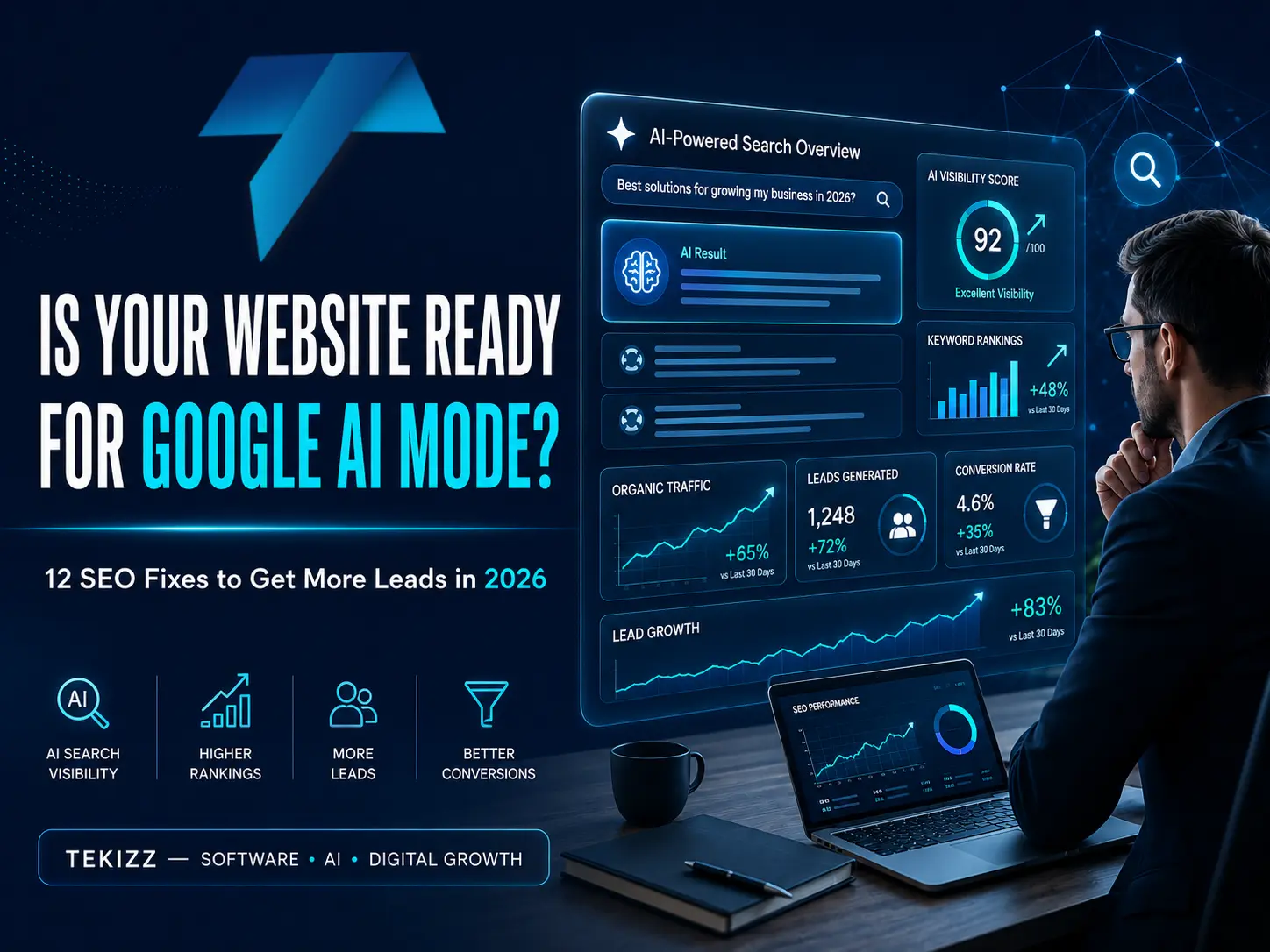
Google Search is changing quickly. Customers are no longer entering only short keywords and opening a list of traditional search results. They are asking detailed questions, comparing service providers and receiving summarized answers through Google AI Mode and AI Overviews.
For U.S. startups, small businesses and growing companies, this creates both a challenge and an opportunity. A website that only contains general service descriptions may struggle to earn attention. A website that provides clear answers, original expertise, strong technical performance and an easy conversion journey has a better opportunity to attract qualified visitors.
Google explains that websites do not need special AI-only markup to become eligible for its AI search features. The same foundations that support regular organic search—including crawlability, helpful content, internal linking and page experience—remain important. Business owners can review Google’s official guidance on AI features and website visibility and its generative AI optimization recommendations.
At Tekizz, we help businesses create scalable websites, web applications, mobile applications, AI solutions and custom software platforms. Based on current search behavior and website conversion principles, here are 12 practical improvements that can make your business website more prepared for AI-powered search.
What Is Google AI Mode?
Google AI Mode is an AI-powered search experience designed to answer longer and more complex questions. It can organize information from multiple sources, provide follow-up options and direct users to relevant websites for additional details.
Google initially expanded AI Mode to users in the United States and continues developing how links, brands and publishers appear within AI-generated search experiences. You can read Google’s official AI Mode announcement for additional information.
This means businesses should optimize their websites not only for short keywords such as “software development company,” but also for detailed questions such as:
- Which software development company is suitable for a healthcare startup?
- How much does it cost to build a custom business application in the USA?
- Should a startup build an MVP, SaaS product or mobile application first?
- How can a business automate manual operations using AI?
- What should I check before hiring a web development company?
12 Website Fixes for Google AI Mode and More Qualified Leads
1. Make Sure Google Can Crawl and Index Your Website
A strong website cannot generate organic traffic when important pages are blocked, duplicated or missing from Google’s index. Start by reviewing your robots.txt file, XML sitemap, canonical tags, redirects and page-indexing status.
Every important service page should return a successful status, load without requiring login access and be included in the XML sitemap. Broken service links should be corrected before investing in additional content or paid promotion.
Use Google Search Console to inspect important URLs and identify pages that are excluded, redirected or not indexed. Google has also introduced dedicated reporting for generative AI visibility, helping website owners understand how their content performs within AI search experiences.
Read Google’s announcement about generative AI performance reports in Search Console.
2. Create a Separate Page for Every Important Service
A single services page containing a few sentences about every offering is normally not enough to answer detailed customer questions. Each major service should have a dedicated page explaining the business problem, proposed solution, development process, technology, expected deliverables and next step.
For example, Tekizz provides dedicated information for companies looking for:
- Custom software development services in the USA
- Professional web application development
- AI software development solutions
- Backend and API development services
- Mobile application development in the USA
Dedicated pages help search engines understand the purpose of each service while helping potential customers quickly determine whether the company can solve their specific problem.
3. Answer the Customer’s Main Question Immediately
Many business websites begin with unclear marketing statements such as “We create innovative digital experiences.” This wording may sound professional, but it does not immediately explain what the company does, who it serves or what result it delivers.
The first section of each service page should clearly communicate:
- What service is being offered?
- Which businesses or industries is it designed for?
- What business problem does it solve?
- What action should the visitor take next?
Clear, answer-first content is easier for visitors to understand and easier for search systems to interpret.
4. Publish Original Experience Instead of Generic AI Content
AI tools can assist with research, outlining and editing, but publishing large amounts of generic content will not automatically create authority. Your website should demonstrate real experience, informed opinions and practical problem-solving.
Strengthen each article by including:
- Lessons learned from completed development projects
- Common mistakes discovered during technical audits
- Architecture or technology-selection explanations
- Before-and-after workflow examples
- Project screenshots and original diagrams
- Realistic timelines and implementation considerations
Google recommends producing valuable, unique and non-commodity content rather than simply rewriting information already available on other websites.
5. Add Relevant Case Studies and Proof of Work
Potential customers need proof before submitting an inquiry. A service page explains what your company offers, while a case study demonstrates how your team approaches a real business challenge.
Your case studies should explain the client problem, business requirements, technical solution, project phases, security considerations, challenges and outcomes. Avoid publishing unsupported performance claims or invented customer results.
Visitors can explore the Tekizz software development case studies, including examples such as:
- Healthcare patient portal development
- Finance dashboard development
- CRM and ERP business automation software
- Logistics tracking software development
6. Strengthen Your Business Trust Signals
Customers are more likely to contact a company when they can understand who operates it, where it works, what experience it has and how it handles projects.
Include a complete About page, contact information, service locations, technology expertise, development methodology and clear privacy policies. Author information should also be displayed on important educational articles where appropriate.
Visitors who want to understand the company before discussing a project should be able to review the Tekizz company profile without searching through several pages.
7. Improve Mobile Speed and Page Experience
Many decision-makers will first visit your website from a mobile search result, LinkedIn post, email or referral. Slow loading, unstable layouts, oversized images and difficult forms can cause potential customers to leave before reading the content.
Compress featured images, use modern image formats, reduce unnecessary scripts, lazy-load non-critical media and test important pages on multiple screen sizes. Google provides additional recommendations in its page-experience documentation.
Website performance should be treated as both a technical SEO requirement and a conversion improvement.
8. Build Helpful Internal Links
Internal links help users discover related information and help search engines understand the relationship between your services, articles and case studies.
For example, an article about startup software planning should naturally connect readers to Tekizz’s MVP development services for startups. An article about automating sales or operations should connect to CRM and ERP software development.
Use descriptive anchor text instead of unclear phrases such as “click here.” Every internal link should help the visitor take a logical next step.
9. Add Accurate Structured Data
Structured data helps search engines understand important page information. Depending on the page, your website may use Organization, LocalBusiness, Service, Article, BreadcrumbList or other supported structured-data types.
The markup must match content that visitors can actually see on the page. Do not add false ratings, fabricated reviews or unsupported business details.
Google states that structured data should be complete, accurate and relevant. Review the official structured-data documentation before implementing or updating markup.
10. Create Content for Detailed Buying Questions
AI-search users frequently ask comparison, cost, process and recommendation questions. These searches can bring visitors who are closer to making a business decision.
Useful commercial blog topics include:
- Custom software versus SaaS: Which option is right for your business?
- How much does custom software development cost in the USA?
- Flutter versus native mobile development for a startup application
- How long does it take to develop an MVP?
- Signs your business needs a custom CRM or ERP platform
- How to select a software development company in the USA
Each article should answer the question honestly and connect the reader to an appropriate service or consultation page.
11. Make Every Important Page Conversion-Ready
Traffic alone does not grow a business. A website must make it easy for the right visitor to start a conversation.
Place a clear call to action near the beginning, middle and end of important pages. Avoid using only a generic “Submit” button. More specific calls to action can include:
- Request a Free Project Consultation
- Discuss Your Software Idea
- Request a Website Technical Audit
- Get an MVP Development Estimate
- Schedule a Discovery Call
Keep inquiry forms short. Ask for the visitor’s name, business email, company, service requirement and brief project description. Additional qualification questions can be discussed after the initial inquiry.
Planning a new website, software platform or AI solution?
Explore Tekizz technology services and discuss your business requirements with our development team.
12. Measure Visibility, Engagement and Inquiries
Website performance should not be measured only by total traffic. A smaller number of qualified business visitors can be more valuable than a large number of visitors with no commercial intent.
Track metrics such as:
- Search impressions for commercial service keywords
- AI Mode and AI Overview visibility where reporting is available
- Service-page engagement
- Consultation form submissions
- Phone and email inquiries
- Case-study visits
- Qualified leads by source
- Inquiry-to-meeting conversion rate
Connect Google Search Console, analytics and your CRM or inquiry-management system so that marketing activity can be linked to actual business opportunities.
A Practical 30-Day AI Search Readiness Plan
Week 1: Technical Review
- Check indexing and crawlability.
- Fix broken internal links and missing pages.
- Review sitemap, canonical tags and redirects.
- Test mobile performance and form functionality.
Week 2: Service-Page Improvement
- Create or expand dedicated service pages.
- Clarify the target customer and business outcome.
- Add FAQs, processes, technologies and calls to action.
- Connect every service page to a relevant case study.
Week 3: Authority Content
- Publish one detailed commercial-intent article.
- Add original examples, expert commentary and diagrams.
- Improve author and company trust information.
- Add relevant internal links between articles and services.
Week 4: Conversion and Measurement
- Improve consultation calls to action.
- Simplify inquiry forms.
- Configure conversion tracking.
- Review Search Console and analytics data.
- Plan the next four articles based on customer questions.
Frequently Asked Questions
Do I need a special file to rank in Google AI Mode?
Google currently states that no special AI text file, AI schema or separate optimization method is required. Your pages should remain crawlable, indexable, helpful and eligible to appear in regular Google Search.
Is traditional SEO still important for AI search?
Yes. Technical SEO, clear site structure, valuable content, internal linking, page experience and trustworthy business information remain important foundations for visibility in both traditional and AI-powered search experiences.
Can a small business appear in Google AI Overviews?
Business size alone does not prevent a page from appearing. A focused small-business website can create useful content around specific customer problems, industries, locations and services. However, no company can guarantee inclusion in an AI-generated result.
How often should business website content be updated?
Update a page when its facts, services, screenshots, processes or recommendations become outdated. Avoid changing publication dates without making meaningful improvements to the content.
Will AI search automatically generate more inquiries?
No. Visibility must be supported by strong service pages, relevant proof, clear calls to action and a simple inquiry journey. Search optimization attracts opportunities, while conversion design turns suitable visitors into potential customers.
Prepare Your Business Website for the Next Stage of Search
Google AI Mode does not remove the need for a strong business website. It increases the importance of publishing clear, original and trustworthy information that directly answers customer questions.
Start by fixing technical problems, improving service pages, publishing genuine expertise, adding case studies and creating a clear path from information to inquiry. These improvements can support visibility across traditional search, AI-powered search and referral channels.
Is your business website prepared for AI-powered search?
Review the complete range of Tekizz software development services, explore our technology project portfolio, or contact our team to discuss a website, mobile application, SaaS platform, AI solution or custom software requirement.