
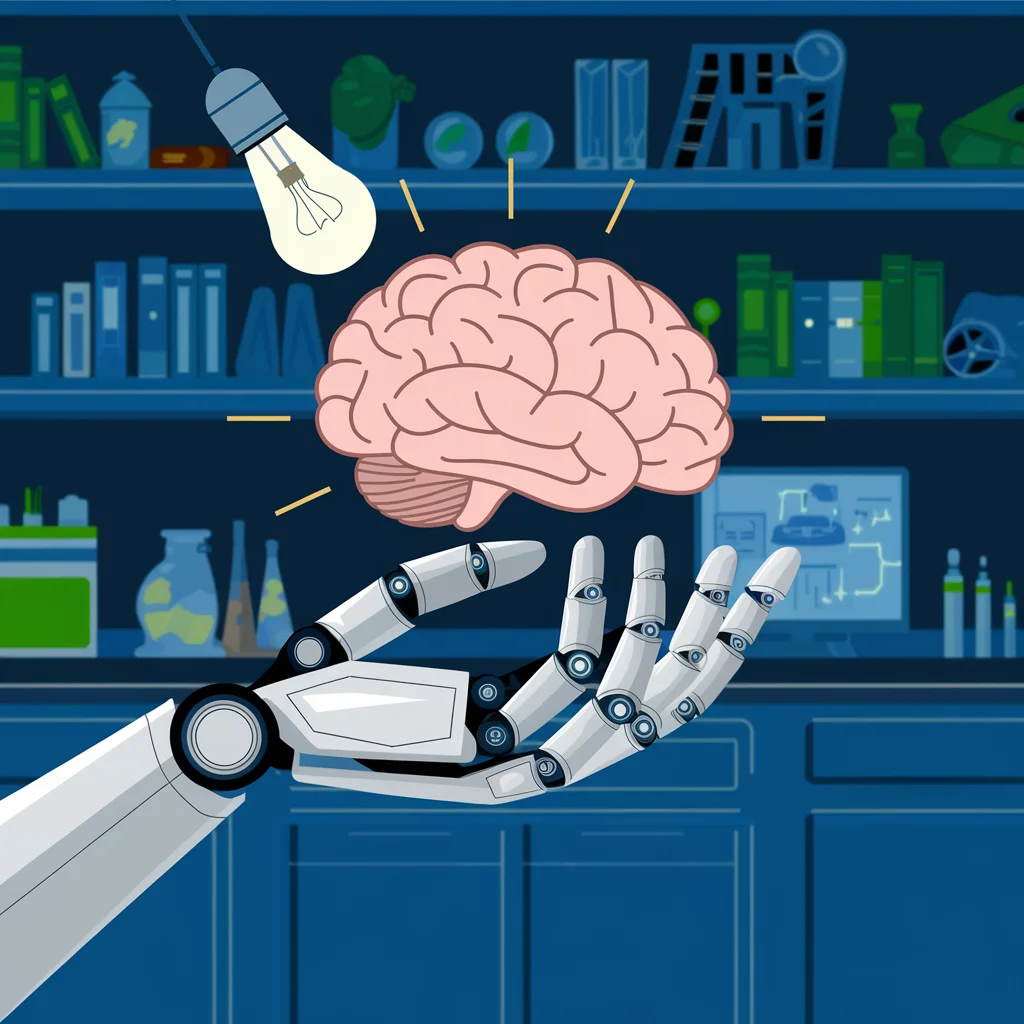
The Evolution of AI and Machine Learning in Information Technology
Artificial Intelligence (AI) and Machine Learning (ML) have moved from experimental technologies to essential parts of modern information technology. In the early stages, businesses used simple automation, fixed rules, and basic scripts to complete repetitive tasks. Today, AI-powered systems can analyze complex data, understand language, generate content, detect unusual activity, recommend actions, and continuously improve through experience.
Machine Learning is a major branch of Artificial Intelligence that allows software systems to identify patterns and improve performance without being explicitly programmed for every possible situation. With the growth of cloud computing, big data platforms, faster processors, and advanced algorithms, AI and ML in IT have become more accessible to organizations of all sizes. Businesses that want to move beyond isolated experiments often rely on structured AI software development services to create secure, scalable, and practical solutions.
From intelligent chatbots and virtual assistants to predictive analytics, fraud detection, cybersecurity monitoring, and automated IT operations, AI and ML are transforming how digital systems are designed and managed. The shift from traditional programming to data-driven and self-learning applications has opened new opportunities, especially when AI is combined with custom software development, reliable APIs, modern cloud platforms, and user-focused digital products.
Why AI and ML Matter in Today’s IT Industry
Modern businesses generate enormous volumes of data through websites, mobile applications, customer interactions, transactions, connected devices, and internal systems. Without intelligent tools, much of this information remains underused. AI and ML help organizations convert raw data into meaningful insights, automate time-consuming processes, improve customer experiences, and make faster decisions.
For IT teams, these technologies are especially valuable because they can support application monitoring, infrastructure management, incident detection, software testing, capacity planning, and service delivery. AI-powered IT operations can identify patterns that are difficult for humans to notice, helping teams prevent problems before they affect customers.
The growing demand for AI engineers, data scientists, machine learning specialists, cloud professionals, and cybersecurity experts also shows how strongly AI is influencing the future of technology careers. Professionals who want to enter this field can build practical foundations through Tekizz’s Data Science course and other career-focused IT training programs.
Key Areas Where AI and ML Are Transforming IT
1. Predictive Analytics and Better Business Decision-Making:
AI-driven predictive analytics helps businesses study historical data and estimate what may happen next. Organizations can use Machine Learning models to forecast customer demand, detect changing market trends, identify sales opportunities, predict operational risks, and improve resource planning.
For example, e-commerce platforms use recommendation engines to suggest products based on browsing behavior, purchase history, and similar customer profiles. Financial businesses use predictive models to evaluate risk and identify potentially fraudulent activity. Healthcare platforms can use analytics to support patient monitoring and operational planning. These use cases are major reasons companies are investing in AI implementation and data analytics solutions.
2. Intelligent Automation and Operational Efficiency:
AI-powered automation can complete repetitive work faster and more consistently than manual processes. Common examples include data entry, invoice processing, document classification, customer support routing, report generation, system monitoring, and workflow approvals.
Robotic Process Automation combined with Machine Learning can handle more complex situations because the system is able to learn from patterns instead of following only fixed instructions. In IT service management, AI tools can categorize support tickets, recommend solutions, answer common questions, and automatically resolve basic incidents. These improvements are more effective when supported by custom engineering solutions designed around real business workflows.
3. Cybersecurity, Threat Detection, and Risk Management:
Cybersecurity is one of the most important applications of AI and ML in information technology. Traditional security tools often depend on known threat signatures, while Machine Learning systems can analyze behavior and identify unusual patterns that may indicate a new or previously unknown attack.
AI-powered cybersecurity tools can support malware detection, phishing prevention, user behavior analysis, network monitoring, identity protection, and automated incident response. These systems can process large volumes of security events in real time and help security teams prioritize the most serious risks. Businesses implementing AI should also follow strong security practices and connect their projects with professional cybersecurity and technology services.
4. Cloud Computing and Intelligent Infrastructure Management:
Cloud computing has made AI and ML services easier to deploy and scale. Major cloud platforms provide access to data storage, model training, analytics, automation, and managed AI services without requiring organizations to build every component from the beginning.
AI can also improve cloud infrastructure by predicting demand, optimizing resource allocation, reducing unnecessary costs, detecting failures, and supporting automatic scaling. In modern IT environments, AI-driven monitoring can study application logs, infrastructure metrics, and user activity to identify potential performance problems before they become major incidents. Organizations often combine AI adoption with cloud and DevOps modernization to create more reliable and scalable systems.
5. Customer Experience and Personalized Digital Services:
AI-powered chatbots, virtual assistants, recommendation systems, and personalization engines have changed how businesses communicate with customers. These tools can provide instant responses, support users at any time, reduce waiting periods, and deliver more relevant information.
For example, an AI chatbot can answer common questions, guide customers through a service, collect initial information, and transfer complex requests to a human agent. Recommendation engines can personalize content, products, and services based on user behavior. To bring these capabilities into real digital products, companies frequently invest in web application development and mobile app development alongside AI integration.
6. Software Development, Testing, and Quality Assurance:
AI is changing the software development lifecycle by assisting developers with code suggestions, debugging, test case generation, documentation, and performance analysis. Machine Learning can identify common defect patterns and help quality assurance teams focus testing efforts on high-risk areas.
AI-assisted development does not remove the need for skilled software professionals. Instead, it helps teams work faster while still requiring human review, architecture planning, security controls, and business understanding. Companies creating intelligent products often need strong backend and API development services to connect AI models with applications, databases, and third-party platforms.
7. IT Support and AIOps:
Artificial Intelligence for IT Operations, often called AIOps, uses Machine Learning and analytics to improve infrastructure monitoring and incident management. AIOps platforms can collect information from servers, applications, networks, databases, and cloud services, then identify relationships between events.
This allows IT teams to reduce alert noise, detect root causes, prioritize incidents, and automate recovery actions. In large environments, AIOps can be especially valuable because manual monitoring becomes difficult as systems grow more complex. AI-supported operations help improve uptime, service reliability, and customer satisfaction.
Popular Business Use Cases of AI and ML
AI and Machine Learning are now used across nearly every major industry. Retail companies use demand forecasting and personalized recommendations. Banks use fraud detection, credit risk analysis, and automated customer support. Manufacturing organizations use predictive maintenance and visual quality inspection. Healthcare providers use AI-assisted diagnostics, scheduling, and patient data analysis.
Logistics businesses use route optimization, delivery forecasting, and warehouse automation. Education platforms use adaptive learning, automated assessments, and personalized content recommendations. Software companies use AI to improve product features, automate support, and analyze customer behavior.
Startups and growing companies can also include AI in SaaS platforms, internal tools, customer portals, and mobile applications. Businesses planning an intelligent subscription product may benefit from SaaS product development services that combine AI features with secure architecture, scalable infrastructure, and user-friendly design.
Main Benefits of AI and ML for IT Organizations
- Faster decision-making: AI systems can analyze large datasets quickly and provide useful insights.
- Improved productivity: Automation reduces repetitive manual work and allows employees to focus on higher-value tasks.
- Better customer service: Chatbots, personalization, and intelligent support tools improve response speed and user satisfaction.
- Reduced operational costs: Predictive maintenance, automated workflows, and optimized cloud resources can lower expenses.
- Stronger security: AI can detect suspicious behavior and help teams respond to threats more quickly.
- Greater scalability: Machine Learning systems can process increasing volumes of data as a business grows.
- More innovation: AI allows companies to create new products, services, and digital experiences.
Challenges and Important Considerations
Although AI and ML offer major advantages, successful implementation is not automatic. One of the biggest challenges is data quality. Machine Learning models depend on accurate, relevant, and well-organized data. Poor-quality or incomplete data can lead to unreliable results.
Data privacy is another major concern. Organizations must protect personal and confidential information, follow applicable regulations, and clearly explain how data is collected and used. Security controls should be included throughout the AI development lifecycle rather than added only after deployment.
Algorithmic bias can also create unfair or inaccurate outcomes. Bias may enter a system through unbalanced training data, incorrect assumptions, or poor model design. Businesses should test models across different user groups, monitor results, and include human oversight for high-impact decisions.
Another challenge is integration with legacy systems. Many organizations still depend on older applications that were not designed for AI. A well-planned modernization strategy is needed to connect models with existing databases, workflows, and business applications. Success often depends on combining AI solutions, application development, and cloud modernization with secure architecture and disciplined engineering.
Responsible AI, Ethics, and Governance
Responsible AI means designing and using intelligent systems in a transparent, secure, fair, and accountable way. Organizations should define who is responsible for AI decisions, how models are evaluated, what data is allowed, and when human approval is required.
Important responsible AI practices include documenting data sources, testing for bias, protecting privacy, monitoring model performance, explaining important decisions, and creating a process for correcting errors. Businesses should also review AI-generated outputs before using them in customer communication, legal processes, financial decisions, healthcare environments, or other sensitive areas.
AI governance should not block innovation. Instead, it should provide clear rules that help teams develop AI safely and consistently. Strong governance increases trust among customers, employees, partners, and regulators.
How Businesses Can Implement AI and ML Successfully
- Define a clear business problem: Start with a measurable challenge instead of adopting AI only because it is popular.
- Assess data readiness: Confirm that relevant, accurate, and legally usable data is available.
- Choose the right use case: Begin with a practical project that can deliver value within a reasonable timeframe.
- Build a proof of concept: Test the idea with a limited dataset before developing a full production system.
- Plan integration carefully: Connect the model with existing applications, APIs, databases, and workflows.
- Include security and governance: Protect data, control access, monitor usage, and document key decisions.
- Measure business outcomes: Track accuracy, time saved, cost reduction, customer satisfaction, and return on investment.
- Monitor and improve continuously: AI models may lose accuracy over time, so regular evaluation and retraining are essential.
A reliable AI project needs more than a trained model. It also requires user interfaces, APIs, data pipelines, cloud infrastructure, testing, monitoring, and ongoing support. Working with an experienced AI software development company can help organizations move from idea to production while reducing technical and operational risk.
Skills IT Professionals Need for an AI-Driven Future
As AI becomes a standard part of information technology, IT professionals will need a combination of technical and business skills. Important technical areas include Python, SQL, data analysis, Machine Learning, cloud computing, APIs, cybersecurity, DevOps, and software engineering.
Communication, problem-solving, ethical judgment, and business understanding are equally important. Professionals must be able to explain how an AI system works, what limitations it has, and how it supports organizational goals. Continuous learning will be essential because AI tools and methods are changing quickly.
Professionals can strengthen their knowledge through hands-on projects, practical courses, certifications, and real-world case studies. Tekizz provides Data Science training, DevOps training, Cybersecurity training, and other IT courses designed around in-demand technology skills.
The Future of AI and ML in IT
The growth of AI and Machine Learning is far from complete. Generative AI, Edge AI, multimodal systems, reinforcement learning, autonomous agents, and self-healing infrastructure are expected to influence the next generation of digital products and IT operations.
Generative AI can create text, images, code, summaries, and recommendations. Edge AI allows models to run closer to users and devices, reducing latency and improving privacy. Autonomous AI agents may complete multi-step tasks, interact with software tools, and support complex business workflows.
Organizations are also exploring hyper-automation, where AI, Machine Learning, workflow automation, and software integration work together to automate end-to-end processes. Self-healing IT systems may detect problems, identify likely causes, and apply approved recovery actions with limited human intervention.
For a deeper understanding of this direction, businesses can explore how agentic AI is transforming data analytics and business intelligence. As these technologies mature, the role of IT professionals will shift toward AI system design, governance, integration, monitoring, and responsible implementation.
Frequently Asked Questions About AI and ML in IT
What is the difference between Artificial Intelligence and Machine Learning?
Artificial Intelligence is the broader concept of creating systems that perform tasks associated with human intelligence. Machine Learning is a subset of AI that allows systems to learn patterns from data and improve performance without being programmed for every situation.
How is AI used in information technology?
AI is used in predictive analytics, cybersecurity, software development, cloud management, customer support, infrastructure monitoring, automation, fraud detection, recommendation systems, and IT service management.
Can small businesses use AI and Machine Learning?
Yes. Small and medium-sized businesses can use cloud-based AI services, chatbots, analytics tools, workflow automation, and custom AI features without building large internal research teams.
What are the biggest risks of AI implementation?
Common risks include poor data quality, privacy issues, security weaknesses, algorithmic bias, inaccurate outputs, lack of transparency, and inadequate human oversight.
Does AI replace IT professionals?
AI is more likely to change IT roles than completely replace them. Repetitive tasks may become automated, while demand grows for professionals who can design, integrate, secure, monitor, and govern AI systems.
How can a company begin an AI project?
A company should start by identifying a clear business problem, reviewing available data, selecting a manageable use case, building a proof of concept, and measuring results before scaling the solution.
Conclusion
The rise of AI and ML in IT represents a major shift in how businesses create software, manage infrastructure, protect data, support customers, and make decisions. These technologies can improve efficiency, reduce costs, strengthen security, personalize digital experiences, and create new opportunities for innovation.
However, successful AI adoption requires more than selecting an algorithm or purchasing a tool. Organizations need quality data, secure systems, responsible governance, skilled professionals, reliable integration, and a clear connection between technology and business outcomes.
The future of information technology will be increasingly intelligent, automated, and data-driven. Businesses that begin developing practical AI capabilities today will be better prepared to compete in the future. Tekizz can support this journey through AI software development services, custom software development, security and cloud modernization, and career-focused IT training programs.
To discuss the right AI and Machine Learning solution for your organization, contact Tekizz today.